


The information provided in this article and elsewhere on this website is meant purely for educational discussion and contains only general information about legal, commercial and other matters. Information on this website may not constitute the most up-to-date legal or other information.The information in this article is provided “as is” without any representations or warranties, express or implied. If you have any specific questions about any legal matter you should consult your attorney or other professional legal services provider.This article may contain links to other third-party websites.
- An audit trail provides visibility into this health information and captures data related to date and time.
- An audit trail records performances, transactions, or system alterations, insuring transparency and due diligence.
- The capability to track who accessed specific records and when is essential for meeting the requirements of legislation such as HIPAA and GDPR.
- Administrators can identify and mitigate security risks if unauthorised personnel attempt to view sensitive information.
- The IRS performs the audit to ensure that financial documents match the amounts recorded on their tax documents.
- We are going to break down the kinds of audit trails, give an example of how they are applicable in different industries, and explain how they function.
Real-Time Fraud Detection:

It is recommended that companies seeking compliance with 21 CFR Part 11 refer to the regulation. SimplerQMS offers a comprehensive eQMS software solution tailored for the Life Bookkeeping 101 Sciences industry and fully compliant with 21 CFR Part 11. It may involve hiring a professional firm that follows the International Standards for the Professional Practice of Internal Auditing or cross-training employees to audit different departments.
- Furthermore, this record gives details of the date, amount and nature of each transaction as in the case of a financial record.
- Automated systems ensure accuracy, consistency, and scalability, reducing the risk of missing critical events.
- It also supports regulatory compliance by providing evidence during audits or investigations.
- In software, an audit trail documents each user’s activity, including changes and approvals, timestamp of dates and times, IP addresses, and user logins.
- Such transparency not only ensures compliance with regulations but also fosters trust among stakeholders, including investors and customers.
- Finally, the organization’s available budget and resources should also be considered, as more nuanced systems and platforms may need greater setup and maintenance costs.
Eliminate Errors, Boost Efficiency

Audit trails are essential for fighting financial crime and ensuring operational integrity. For those working in AML and fraud detection, understanding and implementing effective audit trails can make a big difference. This might include transaction systems, databases, and user activities.Determine goals and requirements.
Types of Audit Trails:
- For example, if you need to find a certain transaction but only have some of the information — the exact price or the date — using audit trail information can uncover all of the data surrounding the transaction.
- Thus, if an employee is accused of embezzling money or stealing intellectual property, digital audit trails should help trace the suspect’s behaviors to either prove or dispel the accusation.
- Our team of pros will set everything up and import your employees’ information for you.
- It’s important for businesses to maintain a comprehensive and complete audit trail so they can track back any irregularities and find process breakdowns if and when they happen.
- Additionally, security teams should conduct periodic manual reviews to ensure thorough analysis.
- Other unusual activity that could arise may be inconsistent patterns of activity by users, attempts to bypass systems or protocols, large scale changes to the information, and unusual internet activity.
Keeping backlogs of data was once a challenging and burdensome issue for many businesses. The advent of Cloud computing makes it much easier for companies to keep their information in a format accessible for auditing for a lengthy period. Audit trails also help identify areas of non-compliance and provide normal balance evidence for audits. The latest notification makes it mandatory for companies to implement audit trails in accounting software to preserve every transaction’s audit trail.

How PAM solutions enhance audit trail management
With a background in cybersecurity and intelligence, Jon brings a strategic perspective to go-to-market efforts, ensuring technical depth is matched by clarity and relevance. audit trail Prior to New Relic, he led marketing initiatives at SaaS and security firms across multiple industries. Outside of work, Jon enjoys spending time with his family, exploring the outdoors with his dog Atticus, and working on creative projects. Trullion’s capabilities span core areas like lease accounting and audit workflows, helping teams embed auditability directly into their daily processes. In the meantime, explore how other leading companies modernize their finance operations with Tipalti.

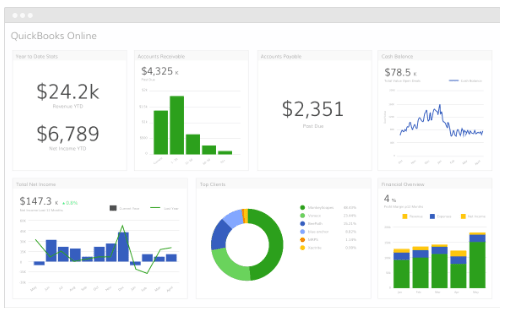
Audit trail is a detailed record that tracks all changes and activities within a system, helping ensure transparency and accountability. In this article, we’ll explore the importance and basics of audit trails in a straightforward way. QuickBooks provides these reports in its accounting software to help companies manage internal audits. The QuickBooks audit trail is an audit log, showing transactions, who made them, when they were made, and a sequential record of changes. But the process of auditing is used in nearly every department of a company, in every industry, sometimes performed internally or by external CPA firms.
- Audit trails are used to verify and track all kinds of transactions, work processes, accounting details, trades in brokerage accounts, and more.
- Simply having an audit trail itself deters internal fraud, as employees know it would be quickly uncovered.
- High-quality electronic records, ideally generated through automation, form strong audit trails to meet and support compliance mandates.
- NIST recommends developing review guidelines specific to the organization in order to ensure a review takes place regularly.
- There are other considerations, for example, keystroke monitoring is a popular way to check-up on user activities, but there is a clear issue with personal privacy in this case.
- Implementing audit trails ensures compliance with industry standards, effective response to security incidents, data integrity and operational transparency.
Streamlined Audits and Compliance
An audit trail improves security by tracking user activities, ensuring only authorized personnel make changes, and providing a detailed log to identify potential fraud or system breaches. The creation of an audit trail is typically an automated process, triggered by the action itself. The system or application generates a record of the action, including all relevant information, and stores it in a secure location. This location is typically a database or a log file, which is designed to be tamper-proof and resistant to unauthorized access.